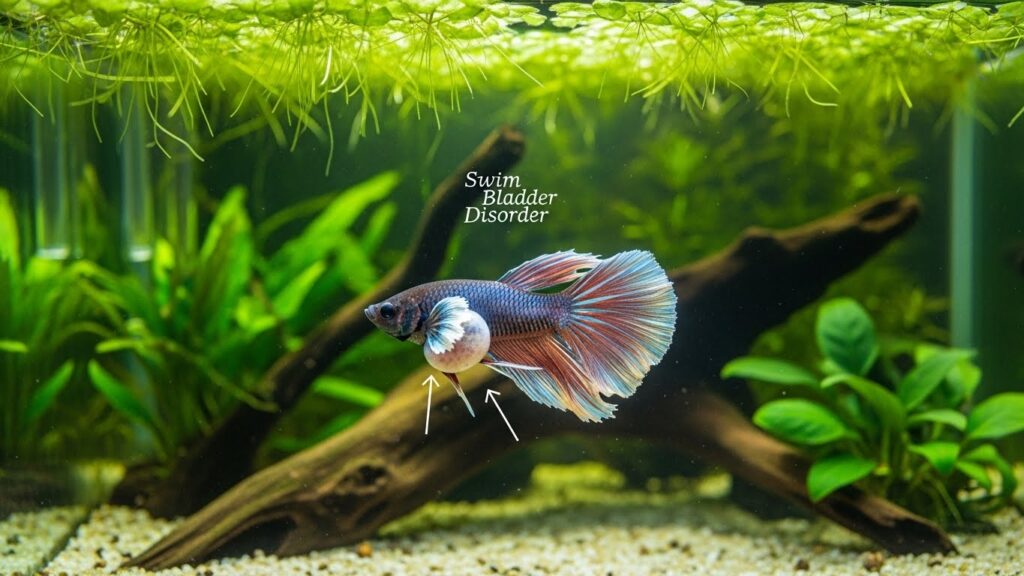

Swim Bladder Disorder is a common condition in betta fish (Betta splendens) that affects buoyancy and swimming ability. Fish with this disorder may float uncontrollably, sink to the bottom, or swim sideways. While not always fatal, it can significantly stress your betta and lead to other health problems.
At Daily Betta, we provide a complete guide to understanding, treating, and preventing Swim Bladder Disorder, ensuring your fish swims confidently and stays healthy.
What Is Swim Bladder Disorder?
The swim bladder is an internal gas-filled organ that helps fish control buoyancy. When the bladder malfunctions, your betta can no longer regulate its position in the water properly.
Swim Bladder Disorder is not a disease itself, but a symptom caused by various factors, including overfeeding, constipation, infections, or physical injury. Early recognition and care are essential to restore normal swimming.
Symptoms of Swim Bladder Disorder
Common signs include:
- Floating sideways, upside-down, or at odd angles
- Sinking to the bottom or struggling to rise
- Loss of balance and difficulty swimming
- Reduced appetite or refusing food
- Lethargy or staying in one spot for long periods
Severe cases can leave the fish unable to swim properly, requiring immediate intervention.
Causes of Swim Bladder Disorder
Swim Bladder Disorder can result from multiple factors:
- Overfeeding and Constipation
- Feeding too much or giving dry pellets that swell can compress the swim bladder
- Poor Diet
- Lack of fiber or variety in diet can trigger digestive issues affecting the bladder
- Water Quality and Stress
- Dirty or fluctuating water parameters can weaken the fish, making swim bladder issues more likely
- Infections
- Bacterial or parasitic infections may damage internal organs, including the swim bladder
- Physical Trauma
- Injuries from jumping, tank accidents, or aggressive tank mates can impair the swim bladder
Treatment for Swim Bladder Disorder
The treatment depends on the underlying cause.
Step 1: Fasting
- Stop feeding for 24–48 hours to allow the digestive system to clear
- This helps if constipation or overfeeding is the cause
Step 2: Feed High-Fiber Foods
- Offer peeled, cooked peas in small portions
- Fiber helps relieve constipation and pressure on the swim bladder
Step 3: Water Quality Management
- Maintain clean, warm water (77–82°F / 25–28°C)
- Check ammonia, nitrite, and nitrate levels regularly
- Avoid sudden temperature changes
Step 4: Isolate if Needed
- If the fish struggles to reach food or swims abnormally, consider a quarantine or hospital tank
- Use gentle filtration and minimal stress
Step 5: Medication (If Infection Is Suspected)
- For bacterial infections, consult a betta-safe antibacterial treatment
- Treat only if you observe signs like bloating, discoloration, or lethargy alongside swim issues
Prevention of Swim Bladder Disorder
Preventing this condition is better than treating it. Strategies include:
- Feed Properly
- Avoid overfeeding
- Use high-quality betta pellets and occasional frozen/live foods
- Include fiber-rich foods like peas or daphnia
- Maintain Water Quality
- Regular water changes and stable temperatures
- Monitor ammonia, nitrites, and nitrates
- Reduce Stress
- Avoid aggressive tank mates
- Provide hiding spots and a calm environment
- Observe Fish Regularly
- Early signs of buoyancy issues allow faster intervention
How Long Does Swim Bladder Disorder Take to Heal?
- Mild cases from constipation may resolve in 1–3 days with fasting and fiber
- More severe cases from infection or trauma may take 1–2 weeks
- Recovery requires patience and consistent care
Common Mistakes to Avoid
- Overfeeding or feeding low-quality food
- Ignoring early signs of buoyancy issues
- Sudden water changes or temperature fluctuations
- Using medication unnecessarily without identifying the cause
Final Thoughts from Daily Betta
Swim Bladder Disorder can be stressful for both the fish and the aquarist, but it is often manageable with proper care. By maintaining good water quality, proper diet, and low-stress environment, your betta can regain normal swimming and live a healthy, active life.
At Daily Betta, we emphasize prevention, early detection, and appropriate care to ensure your betta thrives and remains beautiful and playful.