
Velvet disease, caused by the parasite Oodinium, is a common and potentially serious disease in betta fish (Betta splendens). Named for the fine, velvety gold or rust-colored dust it leaves on the fish’s body, Velvet can stress fish and, if untreated, lead to severe health complications.
At Daily Betta, we aim to provide a complete guide on recognizing, treating, and preventing Velvet disease, so your betta remains healthy, vibrant, and stress-free.
What Is Velvet Disease?
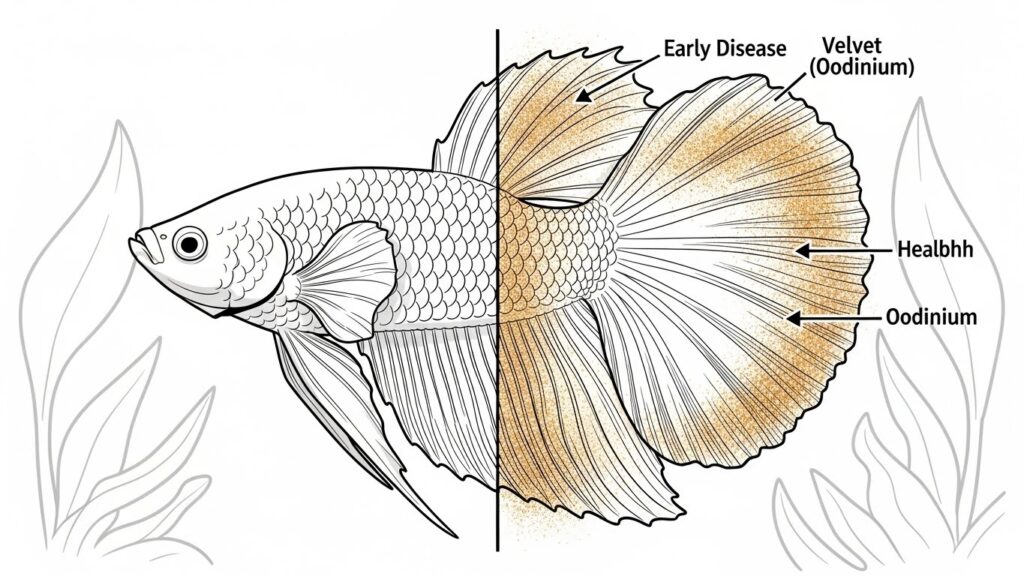
Velvet disease is caused by dinoflagellate parasites that attach to the skin, gills, and fins of bettas. These parasites feed on fish tissue, leaving a dusty, gold, or rust-colored coating on the fish.
Key points about Velvet disease:
- Parasite: Oodinium spp.
- Appearance: fine gold, rust, or yellowish dust over fins and body
- Highly contagious, especially in new or stressed fish
- Can affect gills, leading to respiratory distress
Unlike Ich, which shows white spots, Velvet gives the fish a shimmering, rusty dust-like appearance, which can be subtle in early stages.
Symptoms of Velvet Disease in Betta Fish
Early recognition is crucial for treatment. Common symptoms include:
- Gold, rust, or brown dust-like coating on body and fins
- Lethargy or hiding
- Labored breathing or rapid gill movement
- Clamped fins
- Scratching against tank objects due to irritation
- Loss of appetite
If untreated, the parasite can attack gills, causing respiratory distress, and may eventually be fatal.
Causes of Velvet Disease
Velvet outbreaks are usually triggered by factors that weaken a betta’s immune system:
- Poor Water Quality
- High ammonia, nitrites, or nitrates stress fish
- Dirty substrate encourages parasite growth
- Temperature Fluctuations
- Sudden drops in temperature weaken immunity and trigger infection
- New or Unquarantined Fish
- Velvet often arrives through newly introduced fish or plants
- Stress
- Overcrowding, aggressive tank mates, or rough handling can make fish more susceptible
Treatment for Velvet Disease
Velvet is highly treatable if addressed quickly.
Step 1: Quarantine the Infected Fish
- Move the betta to a separate hospital or quarantine tank
- Keep water clean, stable, and properly filtered
Step 2: Dim Lighting
- Velvet parasites are sensitive to light
- Reduce aquarium lighting or keep the quarantine tank dim during treatment
Step 3: Medication
- Use copper-based or parasitic treatments safe for bettas
- Follow manufacturer instructions carefully
- Treat for 7–10 days, even after symptoms appear to ensure all parasites are eradicated
Step 4: Raise Water Temperature Slightly
- Gradually increase water temperature to 80–82°F (26–28°C)
- Warmer water accelerates the parasite’s life cycle, making medication more effective
Step 5: Supportive Care
- Maintain clean water and proper nutrition
- Provide high-protein foods to boost immunity
- Avoid stressors during treatment
Prevention of Velvet Disease
Preventing Velvet is easier than treating it. Key strategies include:
- Quarantine New Fish and Plants
- Minimum 2–3 weeks in a separate tank before introduction
- Maintain Optimal Water Quality
- Regular water changes and stable temperature
- Keep ammonia and nitrites at 0 ppm
- Minimize Stress
- Avoid overcrowding
- Maintain consistent lighting and temperature
- Provide hiding spots and decor
- Monitor Fish Closely
- Look for early signs of gold or rust-colored dust
- Treat immediately if detected
How Long Does Velvet Take to Heal?
- Mild infections may resolve in 1–2 weeks with proper treatment
- Severe infestations can take 3–4 weeks for full recovery
- Patience is important to allow fins and body to fully regain health
Common Mistakes to Avoid
- Ignoring subtle gold or rust dust in early stages
- Overlooking water quality maintenance
- Introducing unquarantined fish or plants
- Stopping treatment too early, allowing parasites to survive
Final Thoughts from Daily Betta
Velvet disease may look alarming, but it is highly treatable if caught early. Maintaining clean water, stable temperatures, quarantining new additions, and minimizing stress ensures your betta remains healthy and resistant to parasites.
At Daily Betta, we emphasize early detection, proper treatment, and preventive care to keep bettas vibrant and happy.